Data-driven diagnostics of the impact of surface effects on the properties of dielectric barrier discharges (d3DBD)
In recent years, low-temperature plasmas have found wide technological applications, such as chemical processing and surface modification, biomedical applications, and flow control. Understanding the underlying physical and chemical processes relevant to plasma production is therefore of great interest. A common way to gain a deeper understanding of these processes is through numerical modelling and simulations. An accurate description of the plasma and the processes that occur during its production requires the consideration of many particle species and the reactions that occur between them, spanning over long temporal and spatial scales. This often results in a large system of partial differential equations (PDEs), whose solving can take days, weeks, or in some cases even months. Optimising the solution procedure for these equations is therefore of great importance. Recent developments in the field of machine learning (ML) and artificial neural networks provide a great basis for the combination of conventional numerical techniques and modern ML methods to achieve this. The aim of the project is to introduce junior researchers from two partner institutions to the field of plasma modelling, numerical solution of the PDEs and machine learning (ML), establishing a basis for further collaboration and joint advancement of the current state of research.
Funded by the Deutscher Akademischer Austauschdienst e.V. (DAAD), project number 57703239.
Partners: Faculty of Sciences and Mathematics, University of Niš
Kontakt
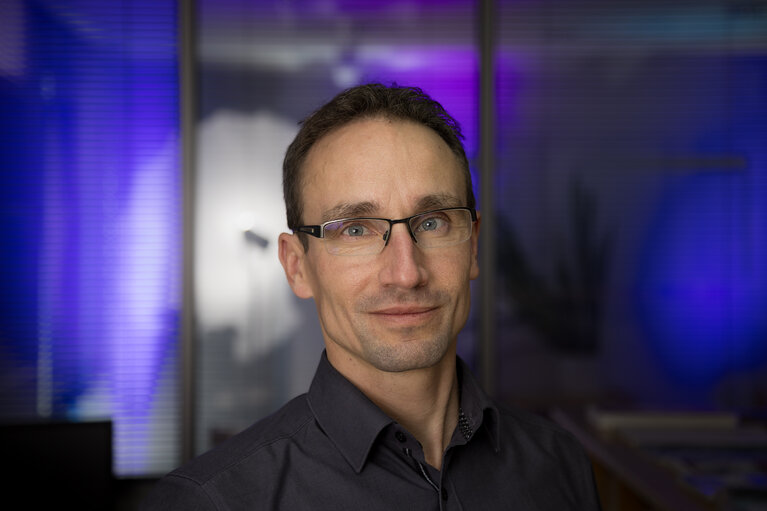
Dr. Markus Becker
Forschungsschwerpunktleiter
Smarte Datentechnologien
Tel.: +49 3834 554 3821