History
Plasma Research with Tradition
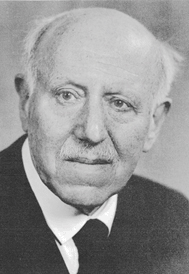
For a good hundred years, physicists have been experimenting with ionised gases, which they have referred to as ‘plasmas’ since the late 1920s. Among these pioneers was Rudolf Seeliger, who joined the Institute of Physics at the University of Greifswald in 1918 and founded a school of thought that gained international recognition in his field. Paul Schulz, also a renowned physicist, founded the Research Centre for Gas Discharge Physics in Greifswald in 1946, based at the Academy of Sciences. His research made possible, amongst other things, the construction of high-pressure xenon lamps, which are still used today for specialised purposes. In 1950, the research centre was granted the status of a full-fledged Institute for Gas Discharge Physics, which was subsequently assigned to the Academy’s Central Institute for Electron Physics (ZIE) in Berlin in 1969.
Following German reunification, the ZIE, like all other institutes of the Academy of Sciences in eastern Germany, was dissolved on 31 December 1991 in accordance with the Unification Treaty. On the basis of an evaluation of its research output, the Science Council of the Federal Republic of Germany recommended the establishment of a new institute, which took effect on 1 January 1992. From the outset, the new institution, the Institute for Low-Temperature Plasma Physics (INP Greifswald), was part of the Leibniz Association. In order to pay clear tribute to Leibniz as its namesake and to his motto – “theoria cum praxi” – as the institute’s strategy, the INP changed its name to the Leibniz Institute for Plasma Science and Technology e.V. on the occasion of its 15th anniversary in 2007.
On September 29, 2022, the INP celebrated its 30th anniversary and renewed its claim to the close interweaving of basic research and applied science.