Process- & Energy Technology
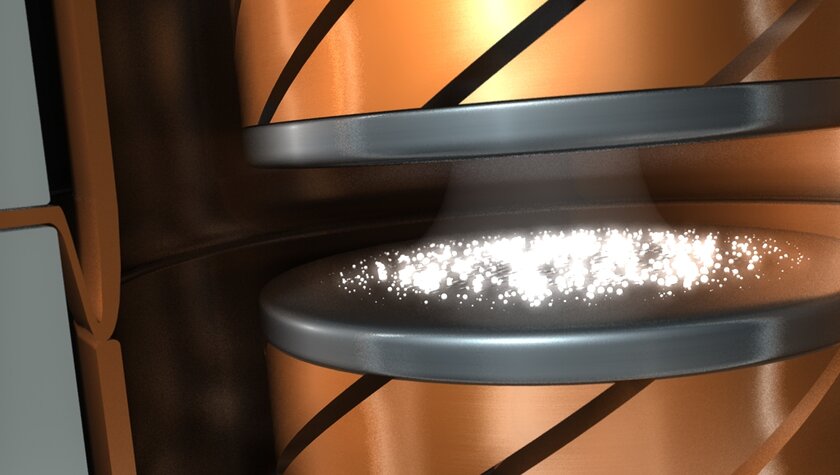
Plasmas with increased energy density are suitable for coupling electrical energy into industrial processes. The corresponding technologies can contribute to defossilization or decarbonization and thus to reducing emissions, especially in industries with high energy demand. Depending on the desired process conditions, thermal plasmas with maximum temperatures between 10 and 20 thousand degrees or plasmas in the transition range to non-thermal plasmas with gas temperatures of several thousand degrees or even less can be used. In addition to the pure energy transfer to gases and solids, plasma can also support chemical conversion processes, for example by splitting molecules. They are therefore suitable for supporting thermochemical processes in hydrogen technology and circular economy. High-energy plasmas also occur when high currents are interrupted, e.g. in power supply networks. The aim here is to change to green switch technology that avoids the use of climate-damaging substances, especially those containing fluorine.
The work in the research programme focuses on the following research questions:
- Understanding of plasma behaviour and plasma chemistry at high pressures and in interaction with catalytically active materials
- Interaction of thermal plasmas with solids, especially in melting and gasification processes
- Behaviour and use of vacuum arcs in high-voltage applications as well as investigations on hybrid switchgear, especially for DC voltage systems
- Electrical breakdown and formation of non-thermal plasmas or plasma regions in correlation with plasma chemistry
Contact
Prof. Dr. Dirk Uhrlandt
Scientific Board Member,
Programme Manager
Process- & Energy Technology
Phone: +49 3834 - 554 461