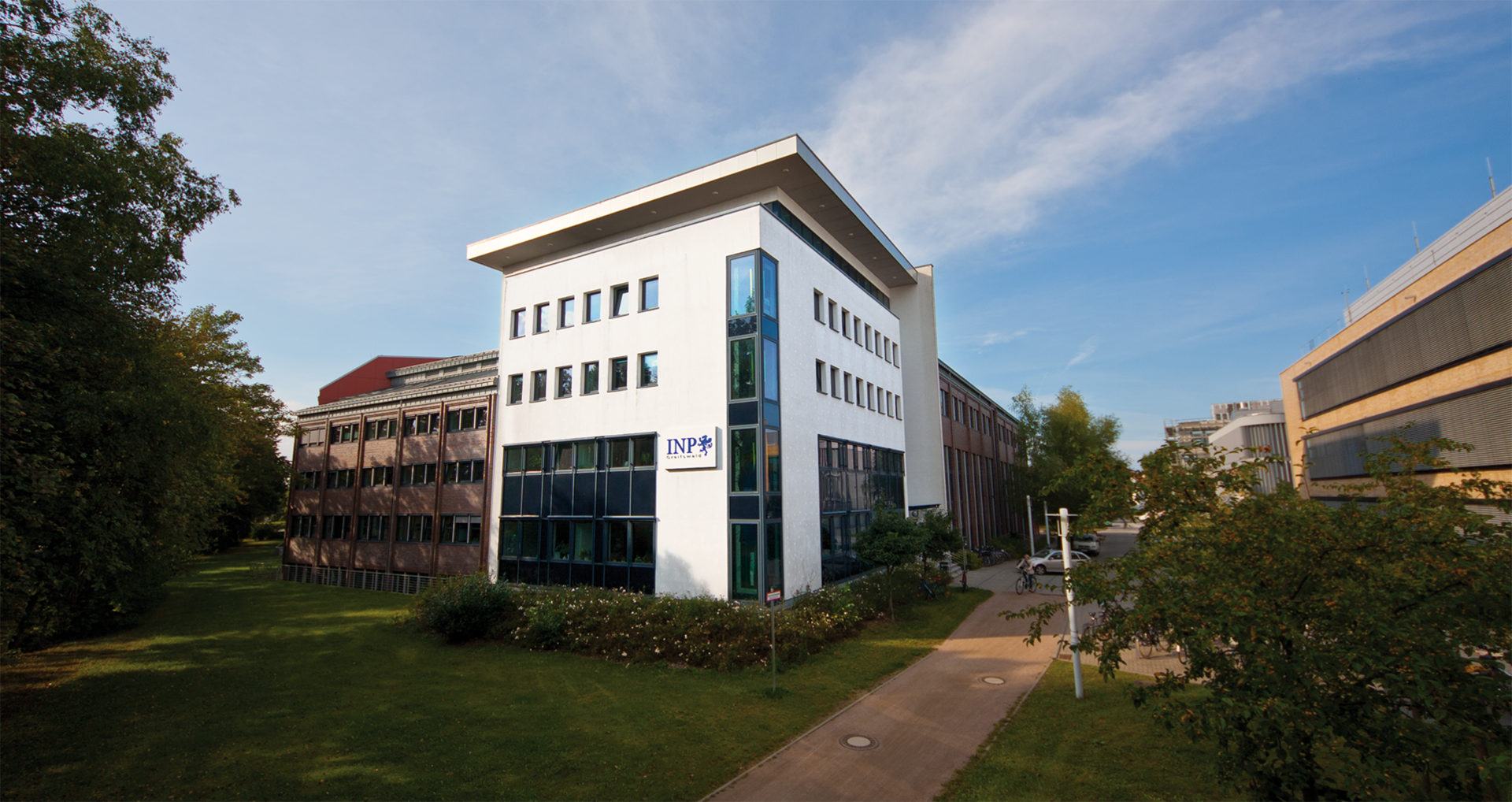
The Leibniz Institute for Plasma Science and Technology (INP) has impressed the experts: Following the regular review of the member institutes of the Leibniz Association by an international and independent jury, it has been confirmed that the INP continues to be a guarantor of forward-looking research. The Greifswald-based Leibniz Institute scored highly thanks to numerous successes in new areas of application such as medicine and agriculture, a high proportion of third-party funding, successful management, various spin-offs and attractive working conditions. Based on the review results, the Leibniz Senate therefore recommends that the INP continue to receive financial support.
A press releasethe Senate's statement published by the Leibniz Association on 15 March 2022 explaining states: "The Leibniz Institute for Plasma Science and Technology (INP) conducts application-oriented fundamental research in the field of low-temperature plasma physics. As the Senate acknowledges in its statement today, it is extremely successful in this field and highly recognised internationally. The INP has further developed its research profile very well in recent years with promising new areas of application. For example, it is increasingly active in plasma medicine and, in cooperation with the University Medical Centre Karlsruhe ( ), now also in clinical research. The field of plasma agriculture has also been established at the institute as a promising new area of research. (...) The institute can point to widely acclaimed publications and pursues an effective transfer strategy. Since the last evaluation, the INP's work has led to two spin-offs in the medical field. The institute regularly attracts an impressive amount of third-party funding (...)."
In addition to comprehensive fundamental research, the Leibniz Institute for Plasma Science and Technology focuses on the development of application-oriented solutions. The premise is: from idea to prototype. The focus is on forward-looking topics such as renewable energies, bioeconomics, plasma medicine and Industry 4.0.
Prof. Dr. Klaus-Dieter Weltmann, Chairman of the Executive Board and Scientific Director of the Leibniz Institute for Plasma Science and Technology, emphasises: "We are delighted that our successful work has been recognised and our strategy endorsed by an independent international jury. Our aim is to use plasma technology to help solve pressing problems facing society. We are currently developing solutions for the use of climate-neutral hydrogen and ammonia for energy generation and for mobility applications such as shipping and transport. In agriculture, we are researching environmentally friendly methods that can reduce the use of agricultural chemicals. In plasma medicine, we are focusing on innovative processes for wound healing and cancer treatment. We supply novel surfaces and sensors for industry. The results of the Leibniz evaluation reinforce our approach and support us in securing further industry and research funding."
Details of the evaluation process
Leibniz Institutes are funded by the federal and state governments. To ensure that funds are used appropriately and effectively, the institutes are evaluated by external auditors at least every seven years. Independent experts from Germany and abroad review the scientific achievements, consulting and service offerings, and strategy of the institutes. Aspects such as cooperation, transfer to society, promotion of young scientists and gender equality are also taken into account. The Leibniz Senate then publishes a scientific policy statement. Together with an assessment by the relevant state and federal ministries, this serves as a basis for the Joint Science Conference (GWK) to decide on the further allocation of funds.
The Leibniz Institute for Plasma Science and Technology (INP) uses these funds to maintain the largest non-university research facility for low-temperature plasmas in Europe. Around 200 employees conduct research into technologies used for coating surfaces, decontaminating food, purifying waste water, treating diseases and in electrical engineering. The INP conducts application-oriented fundamental research and also offers customer-specific solutions, studies and consulting services for industry. Many innovations have already led to patent applications, the development of prototypes and, to date, five spin-offs.