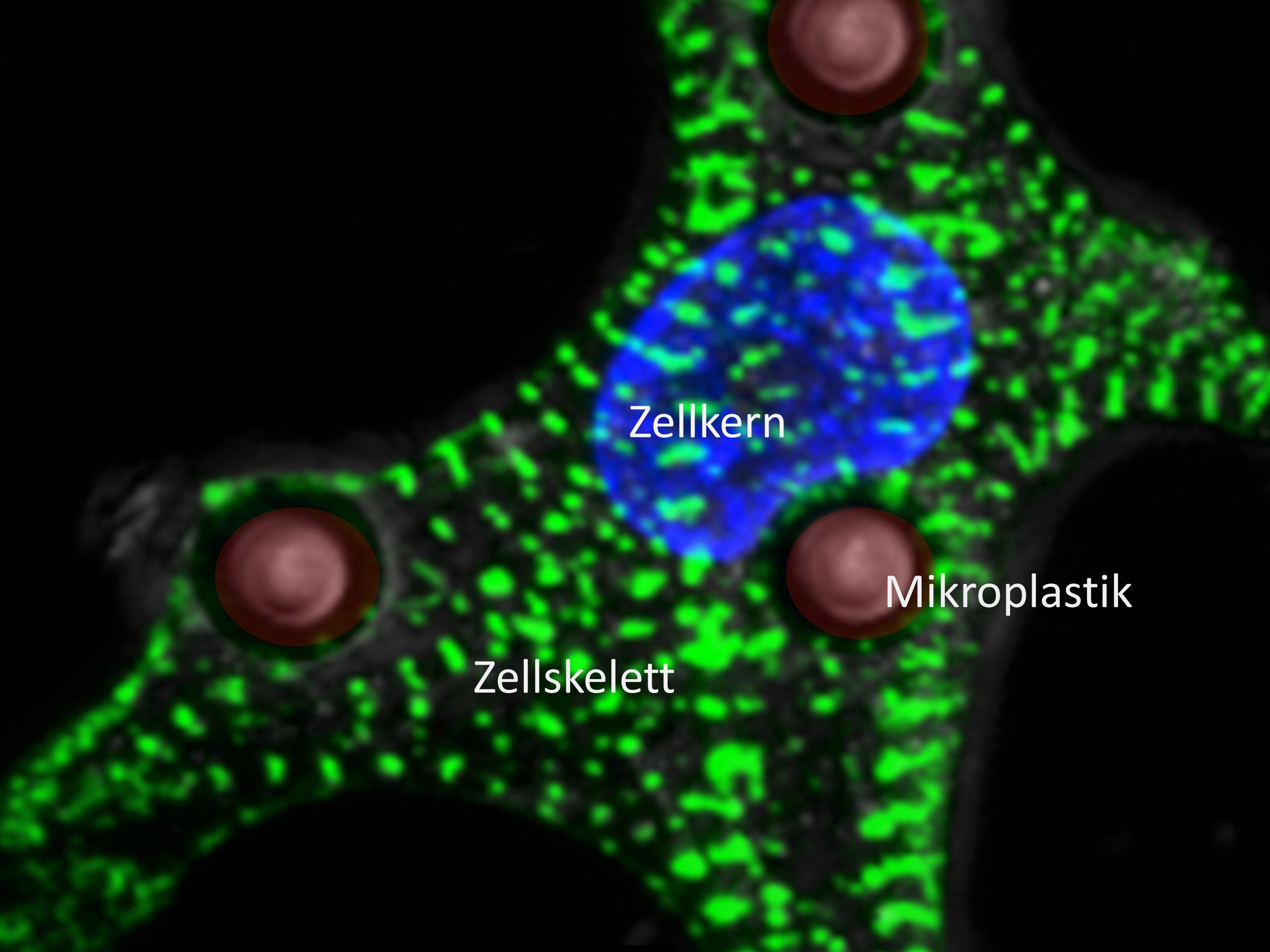
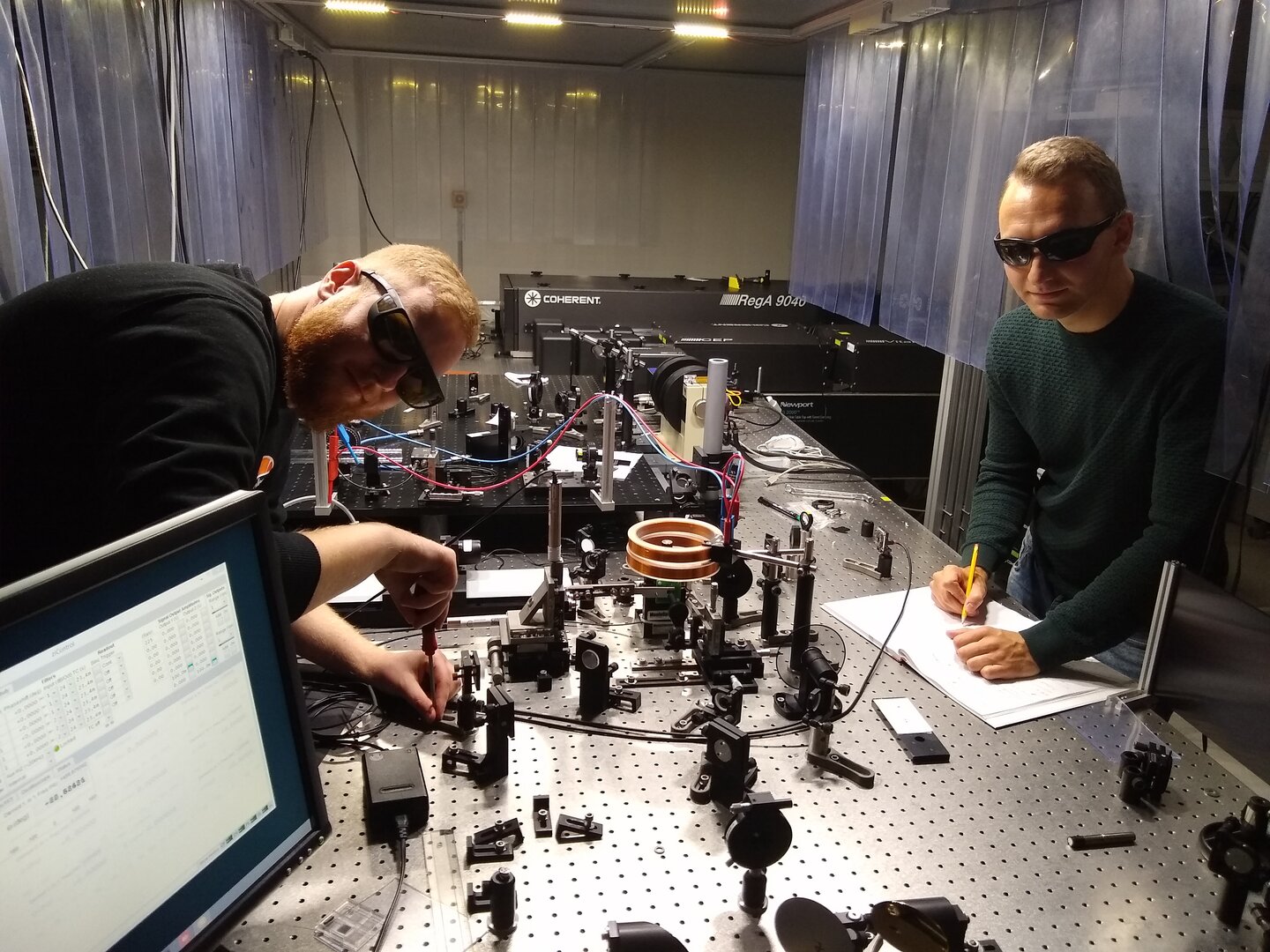
A multidisciplinary consortium of physicists, biochemists, biologists and pharmacists is investigating the effects of microplastics in the body. October 2020 sees the launch of the PlasMark project, which is funded by the German Federal Ministry of Education and Research with €4.5 million and aims to develop label-free diagnostic methods for plastic particles. The joint project is promoting research at three Centres for Innovation Competence (ZIK) in the new federal states: ZIK plasmatis at the Leibniz Institute for Plasma Science and Technology Greifswald (INP), ZIK HIKE at the University of Greifswald Medical Centre and University of Greifswald, and ZIK innoFSPEC at the Leibniz Institute for Astrophysics Potsdam (AIP).
Modern plastics offer an almost ideal combination of properties – they are robust, lightweight, chemically resistant and very easy to process. "This makes them an indispensable part of our everyday lives and leaves their mark on our environment. Not only in large, visible forms such as the notorious plastic vortexes in the world's oceans, but also in tiny particles known as microplastics," explains the initiator of the consortium, Dr Kristian Wende, a scientist at the INP. These microplastics – invisible to the naked eye – pose a serious threat to global ecosystems, the full extent of which is not yet known. A New York study confirmed the presence of 325 particles with a diameter of between 6 and 100 µm per litre of bottled water. Microplastic particles have even been found in Arctic ice – and also in food – fish and mussels. Dr Sander Bekeschus from the INP in Greifswald adds: "Their further fate and impact on the human body are largely unclear. This is partly due to the fact that it is not easy to detect the tiny particles in the complex structures of cells and tissues." This is where the project team comes in. "We are focusing on three different, state-of-the-art technologies," explains Prof. Martin Roth from AIP Potsdam. "In addition to confocal Raman spectroscopy and terahertz spectroscopy, which we know from the so-called body scanners at airports, the suitability of multispectral light and electron microscopy for this purpose is being investigated." All three approaches – some of which are borrowed from astrophysics – are suitable not only for visualising a particle but also for making statements about its chemical composition. This exploits the fact that matter interacts with electromagnetic waves and leaves behind a characteristic fingerprint – a spectrum. This allows the plastic particles to be assigned to their original material, e.g. polyethylene, polystyrene or PVC. While this works well for sufficiently large pieces of plastic, the challenge for researchers is to achieve this fingerprinting for small and tiny particles. Dr Oliver Otto "The transport of microplastics into cells has biological consequences for tissue. At ZIK HIKE, we have already developed methods for researching cardiovascular diseases using biomechanics and nanotechnology, which we will use here." "We also want the process to be simple and fast," emphasises Prof. Mihaela Delcea from ZIK HIKE. Initial results are expected in two years' time, which will enable us to better answer questions about the extent to which microplastic particles are one of the causes of neurodegenerative diseases, cardiovascular diseases or even cancer in the near future.
Contact addresses:
Dr Kristian Wende
ZIK plasmatis
Leibniz Institute for Plasma Science and Technology (INP)
Felix-Hausdorff-Str. 2
17489 Greifswald
Tel.:
Email:
Dr Oliver Otto
ZIK-HIKE
Fleischmannstraße 42
17489 Greifswald
Tel.:
Email:
Prof. Dr. Martin Roth
ZIK innoFSPEC
Leibniz Institute for Astrophysics Potsdam (AIP)
At the Observatory 16
14482 Potsdam
Tel.:
Email: