The Leibniz Institute for Plasma Science and Technology (INP) in Greifswald is breaking new ground in the fight against cancer. A team of six scientists from the associated Centre for Innovation Competence (ZIK) plasmatis wants to find out whether tumours can be contained by plasma treatment as part of a project funded by the Federal Ministry of Education and Research. Initial animal experiments are now being launched, using physical plasma sources of different compositions.
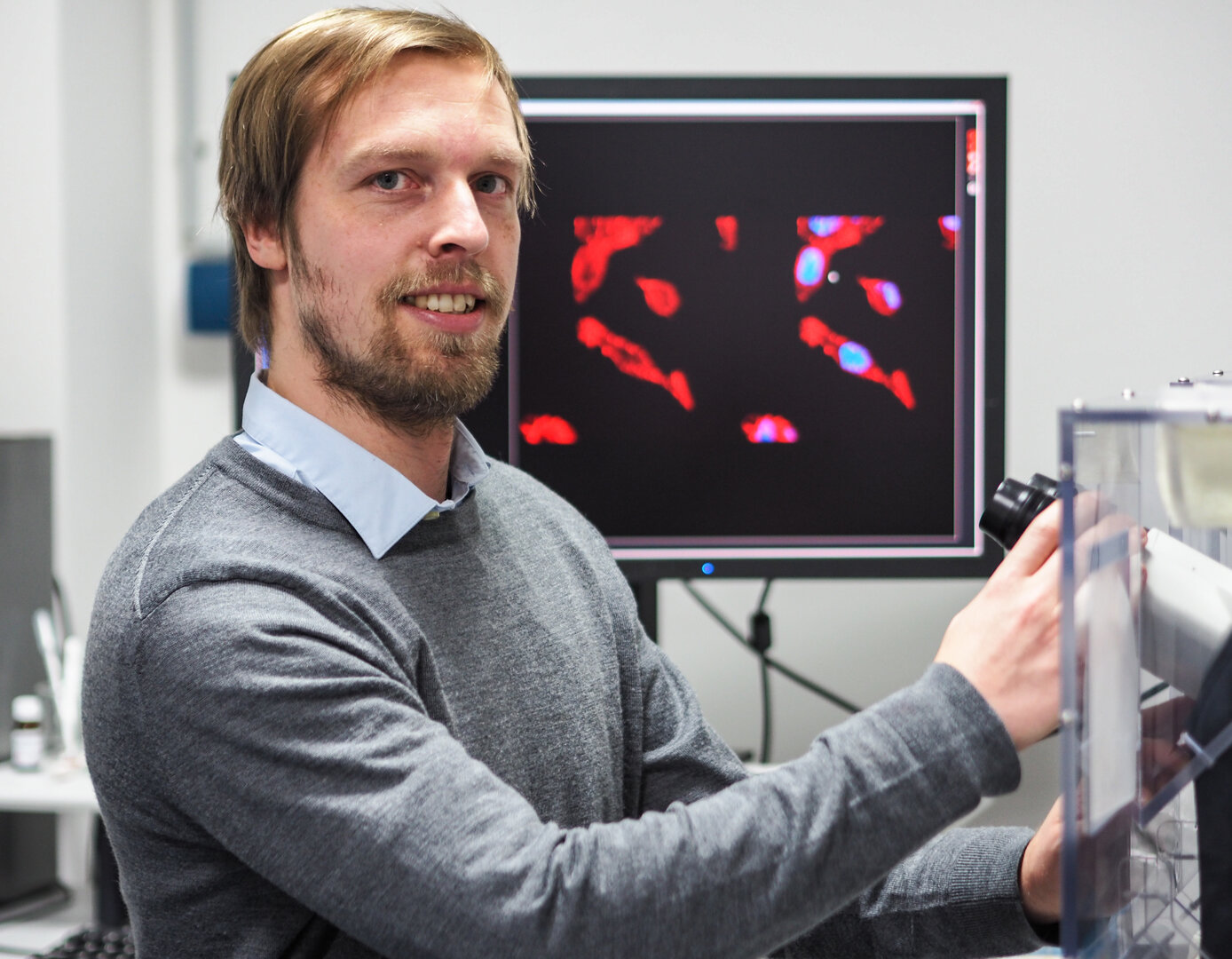
"Our goal is to eliminate cancer cells using a well-tolerated therapeutic method. At the same time, we want to investigate how the body's own immune system can be activated," explains Dr. Sander Bekeschus, head of the "Plasma Redox Effects" research group, which combines expertise from the fields of medicine, biology and physics. Initial results are expected by the end of 2020.
Reactive nitrogen and oxygen compounds are of great importance, says Bekeschus. Many of these molecules occur in the human organism and are also found in plasma. If these free radicals could be used to damage tumour cells and make them visible to the immune system again, plasma-based methods could complement established therapies, explains the immunologist. "That would be a breakthrough for us." Stimulating the body's own defence system is the only way to effectively suppress metastases. These secondary tumours are responsible for 90 percent of cancer deaths.
"The medical plasma devices developed at our institute are already being used in many clinics to treat wound infections and skin diseases. Now we want to contribute to ensuring that cancer patients receive even more effective therapy through further research," says Klaus-Dieter Weltmann, CEO and Scientific Director of the INP.
The latest research findings will also be the focus of the international workshop "Plasma for Cancer Treatment," which will take place for the first time in the Hanseatic city of Greifswald on 20 and 21 March.
The workshop is being hosted by the INP and Greifswald University Hospital. The organisers are expecting around 120 scientists from 21 countries. In previous years, the conferences have been held in Paris, Washington and Nagoya.
About the INP:
Plasma is the fourth state of matter after solid, liquid and gas. The electrically conductive mixture of atoms, ions, electrons and molecules is created when energy is added to a neutral gas. This natural phenomenon can be found in lightning, the sun and the aurora borealis. At the Leibniz Institute for Plasma Science and Technology ( Technologie), the largest non-university research institution for low-temperature plasmas in Europe, around 200 employees are conducting research into technologies that are used for coating surfaces, decontaminating food, cleaning liquids, but also in the medical industry and electrical engineering. The INP conducts application-oriented fundamental research and also offers customer-specific solutions, studies and consulting services for industry. Many innovations have already led to the development of prototypes and spin-offs.
The institute has also made great strides in plasma medicine: cold plasma devices invented and developed at the INP enable the gentle treatment of chronically infected wounds and pathogen-related skin diseases. These include the Plasma-Jet kINPen®, which has been approved for use on patients since 2013. It is distributed worldwide by the INP subsidiary neoplas tools. INP scientists have also developed and patented a prototype of a silicone-based plasma patch. With start-up funding, the special wound dressing was further developed at the institute and is now approved and marketed independently by the spin-off company Coldplasmatech.