Significant reduction in infectivity in the laboratory
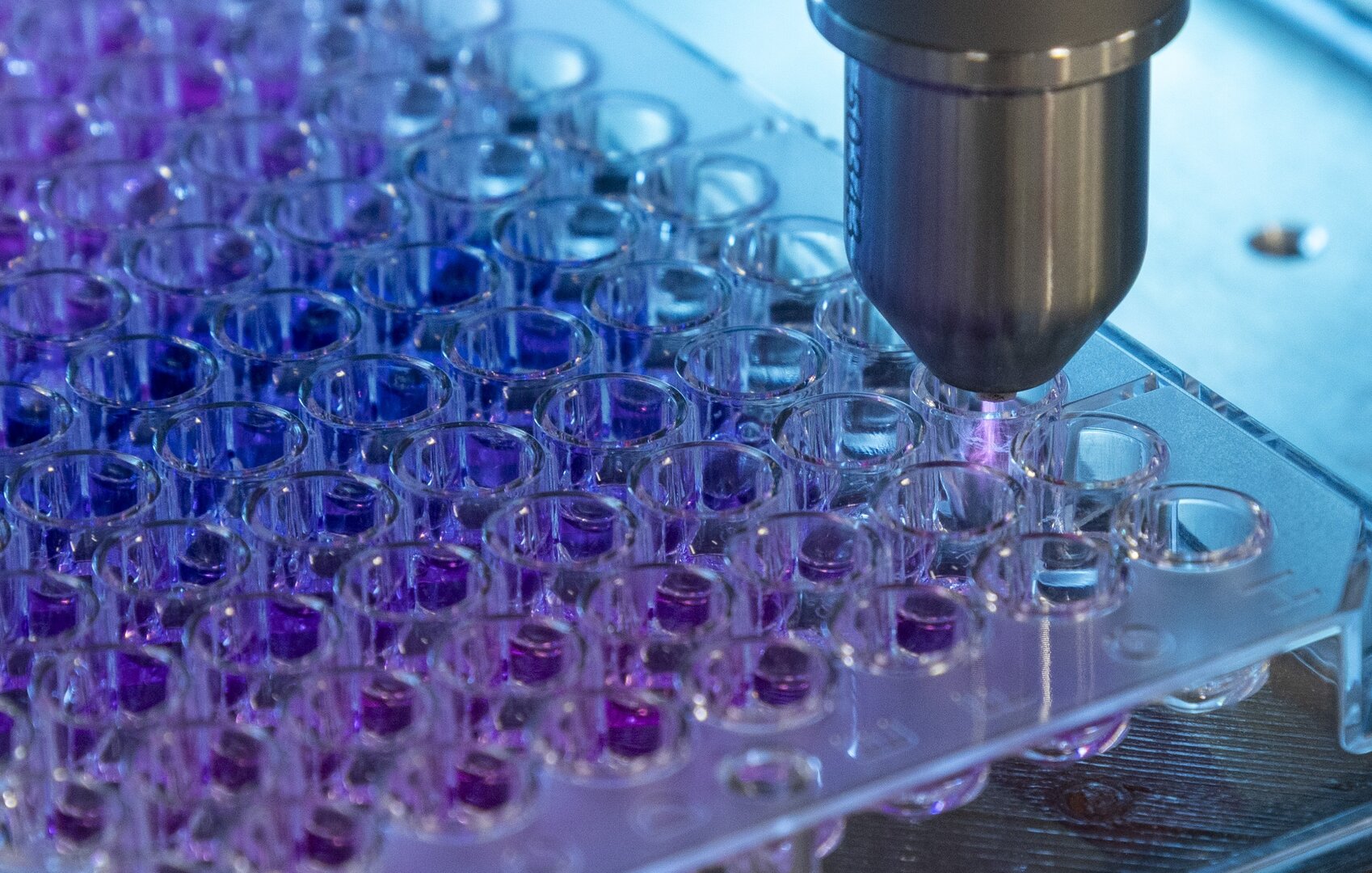
Adenoviruses are robust pathogens. They can cause colds, conjunctivitis or gastrointestinal infections, for example, and survive on surfaces for long periods of time. In the experiments, the researchers used a special argon plasma jet, which is also used in plasma medicine. The result: the longer the viruses were exposed to the plasma, the less able they were to infect cells. After just 90 seconds of plasma treatment, their infectivity in cell cultures was reduced by around 96 per cent.
Chemical reactions instead of gross destruction
The study also investigated why plasma is so effective. It showed that the viruses are not destroyed by heat or mechanical action. Instead, highly reactive oxygen and nitrogen compounds are formed in the plasma. These act like tiny chemical attackers. "The plasma does not act indiscriminately. It specifically alters certain components of the virus envelope, i.e. exactly where the virus normally docks onto human cells," explains INP study leader Prof. Dr. Sander Bekeschus.
Attack on the virus envelope
More detailed analyses showed that certain protein building blocks in the virus envelope were chemically altered. These building blocks are important for the stability of the virus and for contact with human cells. Dr Anke Schmidt, lead author of the study, explains: "The plasma primarily alters proteins that the virus needs to penetrate a cell. Without this ability, the virus can no longer cause infection." Images taken with an electron microscope revealed the consequences: the virus particles changed shape and shrank by an average of about 16 percent. The genetic material of the viruses, on the other hand, remained largely undamaged. Additional tests confirmed that these effects are due to the chemical action of the plasma.
Basis for future applications
The study thus describes for the first time exactly where medical gas plasma attacks adenoviruses. This knowledge is an important basis for the targeted further development of plasma technologies, for example for the disinfection of surfaces or medical devices. At the same time, the researchers emphasise that the results are based on laboratory experiments. Before concrete applications are possible, further studies, for example on infected lungs, must follow to confirm the effectiveness in organisms.
The study has been published in the internationally recognised journal Small (DOI: 10.1002/smll.202511792).