Researchers from Neubrandenburg are making valuable harvests last longer. As part of the alliance 'PHYSICS FOR FOOD – A REGION THINKS AGAIN!', grain beetles and moulds on cereals are being combated:
With the help of plasma, grain weevils in the harvested crop are treated directly on a specially designed conveyor belt and rendered harmless. Fungal spores are eliminated from grain stored in silos by means of plasma-treated air. Both methods secure crop yields and are an alternative to chemical treatment in bulk goods.
Grain beetles are among the most common pests in the post-harvest sector. In extreme cases, they can cause a total crop failure. They eat their way through the grain husks and lay their eggs in the grain. According to the internet portal "Ökolandbau" (organic farming), a single female grain beetle can produce 250,000 offspring in a year. The same number of grains are lost, corresponding to a weight of six kilograms. In crops infested on a large scale, so-called "heat pockets" also develop, increasing the humidity and thus the risk of the grain being attacked by fungal spores. The economic damage caused by fungi and pests runs into millions worldwide.
As in the entire agricultural and food industry, the use of chemical pesticides to combat insects is gradually being restricted or banned. However, extreme weather conditions such as heat, drought and flooding are currently on the rise, and with them pest infestations. The PHYSICS FOR FOOD alliance, which was initiated by the Neubrandenburg University of Applied Sciences, the Leibniz Institute for Plasma Science and Technology (INP) in Greifswald and other business partners in the region, is researching environmentally friendly physical methods to find an alternative answer to the challenges of the future.
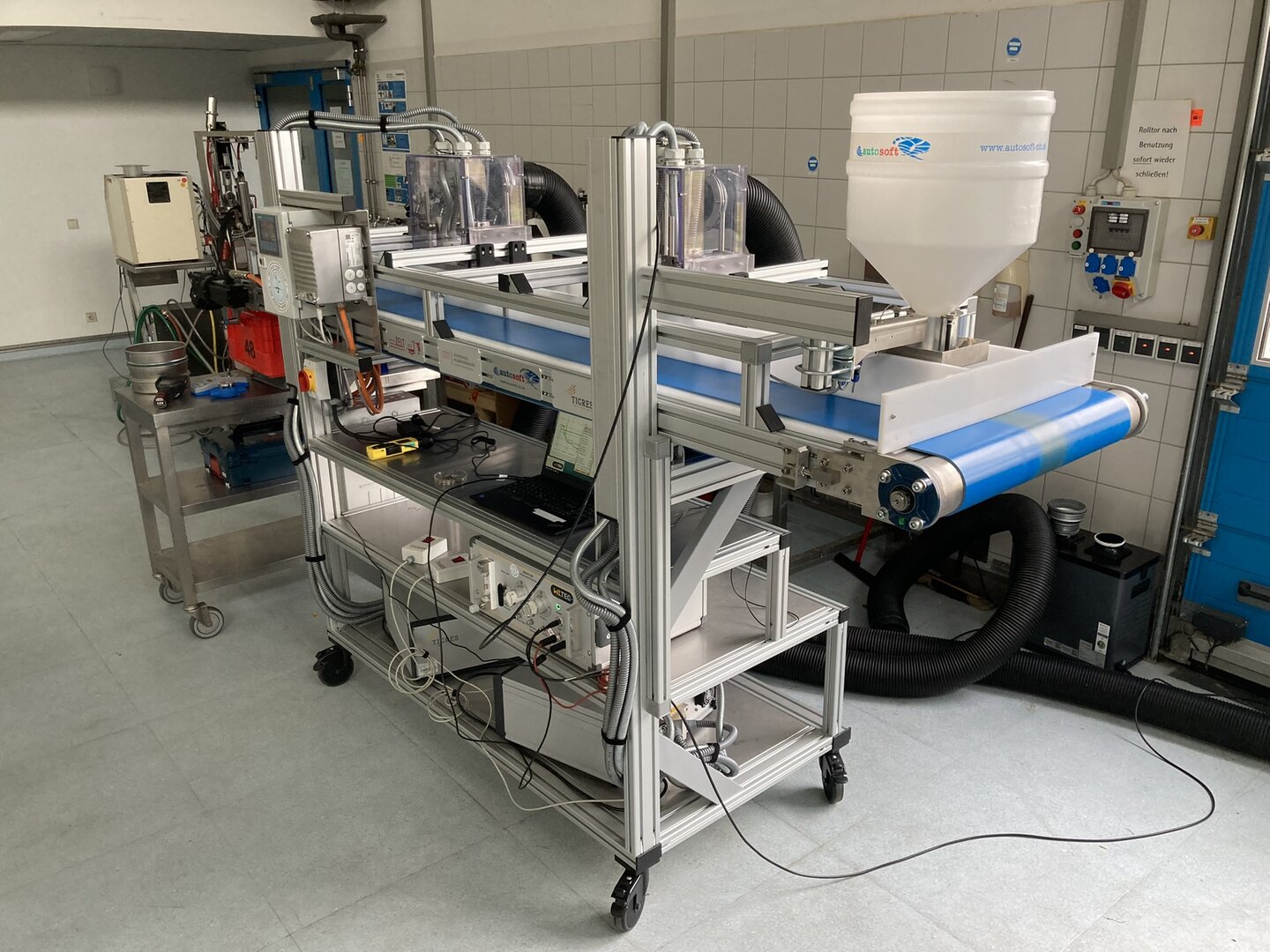
In the PHYSICS FOR FOOD & FEED sub-project, after more than two years of joint planning and research, a conveyor belt has now been modified by project partner automation & software Günther Tausch (autosoft) from Neubrandenburg. Sebastian Glaß, project manager and employee at the Centre for Nutrition and Life Technology gGmbH (ZELT), is enthusiastic about the prototype and its possibilities.
After all, laboratory tests with cold atmospheric pressure plasma have shown that 99 percent of grain beetles can be rendered inactive. "In the coming weeks and months, we will conduct experiments using the conveyor belt to see whether the results from the laboratory can be confirmed," he says. After all, this is one of the largest conveyor belts with a plasma facility in the world. Individual tests are now being carried out to determine the appropriate throughput rate for grains and the conveyor speed to achieve the greatest benefit.
Alfred Bligenthal, senior consultant at project partner Hafen Vierow GmbH and one of the spokespersons for the PHYSICS FOR FOOD project, is eagerly awaiting this development: "The social relevance is of immense importance. Progress is being made, and it is important for farmers and warehouse operators to know that they will be able to use the technology in a few years' time and that it is suitable for large-scale application."
For research in the sub-project, a silo measuring a good three metres high has been erected and a sophisticated plasma ventilation system installed. Stored grain is to be surrounded by plasma-treated air so that fungi and bacteria have no chance of developing. In tests, fungal spores were significantly reduced by 99.99%, i.e. 4 log levels.
The development of the plasma silo was just as complex as that of the conveyor belt and took 1.5 years. What makes it special is the combination of a gas-tight bulk material silo – as used for animal feed – with innovative plasma technology for pest control. For research purposes, it is equipped with the ability to record the climatic conditions and gas composition inside the silo, treat the stored bulk material during storage and take samples.
About PHYSICS FOR FOOD
The Neubrandenburg University of Applied Sciences, the Leibniz Institute for Plasma Science and Technology (INP) and commercial enterprises launched the project 'PHYSICS FOR FOOD – A REGION THINKS AHEAD!' in 2018. Since then, the alliance has been working with numerous other partners to develop new physical technologies for agriculture and food processing. Atmospheric pressure plasma, pulsed electric fields and UV light are used in this process.
The aim is to optimise agricultural raw materials and reduce pollutants in food production, reduce chemical agents in seed protection and strengthen plants against the effects of climate change. It is funded by the Federal Ministry of Education and Research as part of the 'WIR! – Change through Innovation in the Region' initiative (funding code 03WIR2810).