The CAMPFIRE partnership alliance is striving for change in the region through a new field of technology for the expansion of renewable energy.
On some days, wind, water, sun and biomass could theoretically produce enough renewable energy to cover Germany's entire energy needs. However, the infrastructure urgently needs to be expanded in order to transport this green electricity to where it is needed, when and where it is needed. There is therefore a great need for innovation in the energy sector. One solution is sector coupling. The aim is to bundle the energy requirements of different application areas, such as transport, heating and electricity, and make them available through new technologies. Membranes and micro- and nanostructured materials are among the core components of future conversion and storage technologies. These can be used in hydrogen and battery technology.
The north-east region is emerging as a future region for the energy transition. It includes the coastal cities of Rostock, Stralsund and Greifswald, as well as Neubrandenburg in the Mecklenburg Lake District. These are locations with a long tradition in the research, development and application of innovations for energy production and with great significance for science, industry and society. With the CAMPFIRE project, the current 20 alliance partners are working on solutions to some of the biggest challenges of the energy transition. Under the leadership of the Leibniz Institute for Plasma Science and Technology (INP), the Institute for Climate Protection, Energy and Mobility (IKEM) and the Institute for Regenerative Energy Systems at Stralsund University of Applied Sciences (IRES), the possible applications of this technology field are being investigated and implemented in the region.
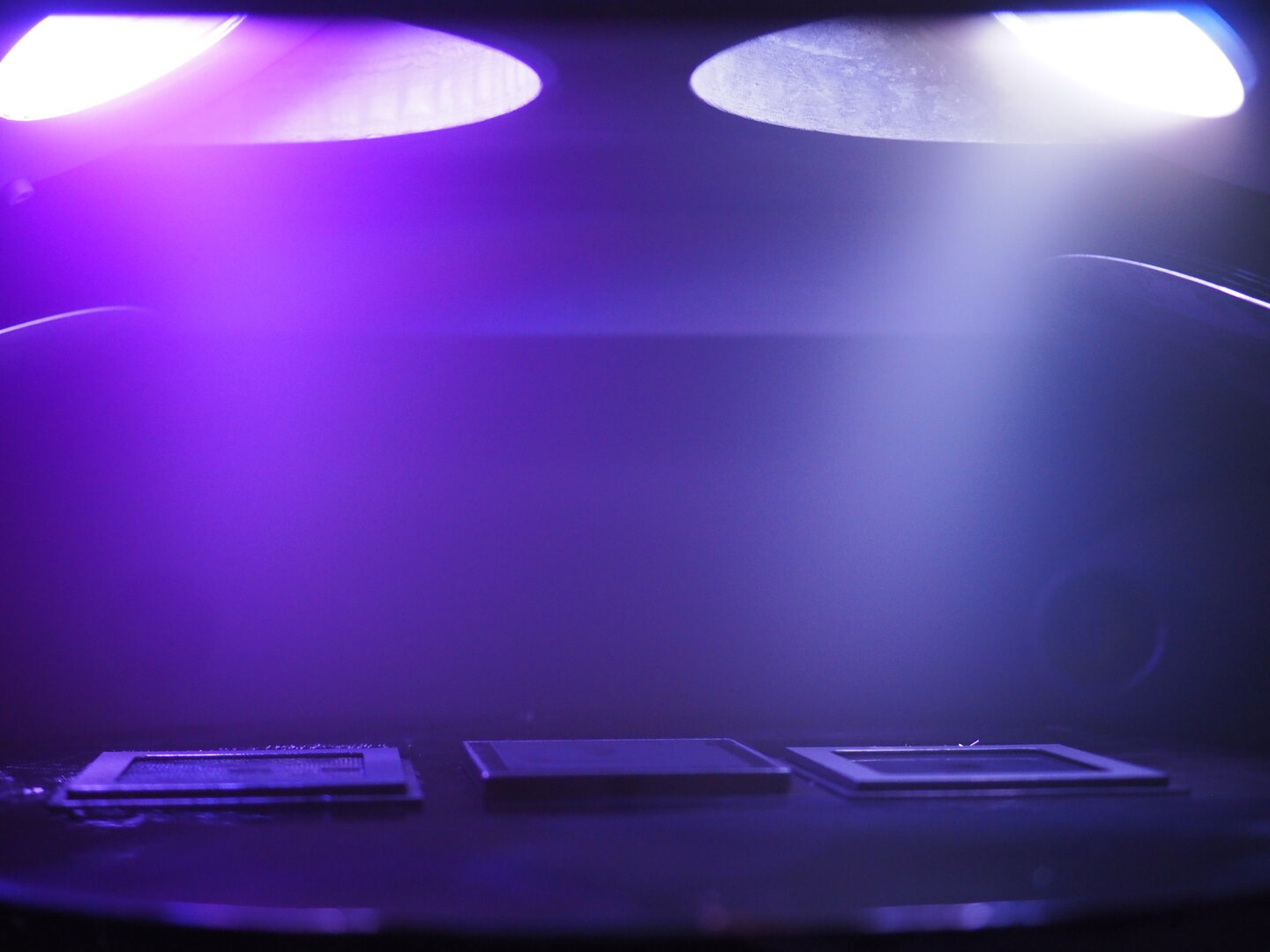
The alliance partners are developing technical, conceptual and transformative solutions for the region based on nanomembranes, which are generally thinner than a millionth of a metre. The development of manufacturing processes for such nanomembranes is one of the key technologies for innovations in the energy transition. By transferring this scientific know-how to future energy process engineering, a groundbreaking economic and social breakthrough is expected for the region – for example in the fields of electrolysis, fuel cells and solar cells. In addition to the aforementioned partners, the Leibniz Institute for Catalysis (LIKAT) and the Centre for Fuel Cell Technology (ZBT) in Duisburg and the Institute for Competence in Automobility (IKAM) in Magdeburg are also contributing their expertise to CAMPFIRE. This means that a nucleus of pioneering work is being established by regional companies. The project participants combine expertise in plasma physics, nanotechnology, mechanical and plant engineering, modelling, energy technology, business administration, materials science, law and political science.
During an upcoming concept phase, the CAMPFIRE partners will identify application areas with the greatest economic and social potential for the new technology field and use these to develop a roadmap for the subsequent implementation phase. For example, electroceramic thin-film membranes can be used to increase the efficiency and service life of power-to-gas plants, in which green electricity is converted into hydrogen or methane gas. "With our thin-film membranes, significantly more green fuel could be produced from surplus electricity," says alliance coordinator and deputy director of the INP, Prof. Dr. Dirk Uhrlandt. He hopes this will provide an economic boost for the north-east region, which is one of the largest producers of renewable energy in Germany. "A completely new industry could emerge here, using hydrogen as the energy source of the future, for example. Research into new technologies is crucial for the success of the energy transition and the move away from fossil fuels."
Background
The regional CAMPFIRE project is an initiative within the framework of the "WIR! – Change through Innovation in the Region" funding programme of the Federal Ministry of Education and Science (BMBF) to increase innovation capacity in structurally weak regions. Initially, projects in eastern Germany will be funded, followed by projects in western Germany in the next stage. Following the concept phase, which starts in April and will run for seven months, selected alliances will receive up to 8 million euros from the BMBF for the implementation phase. The CAMPFIRE alliance partners are hoping for a positive evaluation and aim to start the implementation phase in early 2019.