According to the guide, virtually all methanol produced worldwide – around 99 per cent – has so far come from fossil raw materials such as natural gas or coal. Green methanol, on the other hand, can be produced from green hydrogen and carbon dioxide. The hydrogen is produced by electrolysis using electricity from wind or solar power plants, whilst the required CO₂ can come from biogenic sources or industrial waste gases. A second method involves biogenic residues and waste, which are first converted into a gas mixture and then processed into methanol.
Initial methanol projects in Mecklenburg-Western Pomerania demonstrate potential
According to the guidelines, Mecklenburg-Western Pomerania offers favourable conditions for this: abundant renewable energy, usable CO₂ sources, industrial and port sites, and an active research community. Initial projects are already demonstrating what this could look like.
The ‘Green Dettmannsdorf’ project aims to combine wind and solar energy, battery storage and local heating with the use of biogenic residues. Biogenic CO₂ from the revitalised ‘Baltic Distillery’ is to be converted into methanol. Concrete planning began in November 2025.
In Anklam, Enertrag is planning a plant in collaboration with the sugar factory operator Cosun Beet Company that will utilise biogenic CO₂ from sugar beet processing. At the port of Mukran, the world’s first methanol-powered supply vessel for an offshore wind farm has been in operation since April 2025.
Beyond individual plants, larger research consortia are also emerging across the state. In the biogeniV alliance, more than 40 partners from eastern Mecklenburg-Western Pomerania are working to convert biogenic residues and CO₂ into green methanol using wind and solar energy. The federal government is funding the project with 15 million euros; the first demonstration plants are due to be built by 2028.
In Rostock, the Fraunhofer Institute for Large-Scale Structures in Production Engineering (IGP), the Leibniz Institute for Catalysis (LIKAT) and the INP are pooling their expertise at the “Forschungsfabrik Wasserstoff MV”. Whilst LIKAT and INP are conducting research into the production of green hydrogen and alternative fuels and storage media, the Fraunhofer IGP is testing, on its own large-scale engine test rig, how these fuels can be used in the maritime industry.
“Mecklenburg-Western Pomerania has many key elements that are important for a methanol economy. These include renewable energies, usable CO₂ sources, ports, industrial customers and research institutions. It is now crucial to plan these areas jointly and create reliable framework conditions for specific projects, so that new regional value can be generated,” says Yvette Gonzalez, HyCore cluster manager at the INP.
Where the challenges lie
However, existing potential alone is not sufficient for economically viable methanol production. Green methanol currently costs significantly more than the fossil-based product, and long-term supply and off-take contracts are often lacking. Added to this are complex approval procedures, as well as electricity, hydrogen and CO₂ infrastructures that are not yet sufficiently interconnected. There is also a lack of market-ready modular plants for small and medium-sized sites.
The guide therefore recommends establishing regional methanol production sites centred around energy generation, industrial consumers and ports, as well as CO₂ point sources. These include biogas plants and sugar beet processing facilities. Hydrogen supply should be factored into the planning from the outset. Furthermore, approval procedures need to be better coordinated. Further recommendations relate to demonstration projects, research partnerships, long-term off-take agreements and transparent communication with the public.
Guide brings together expert knowledge
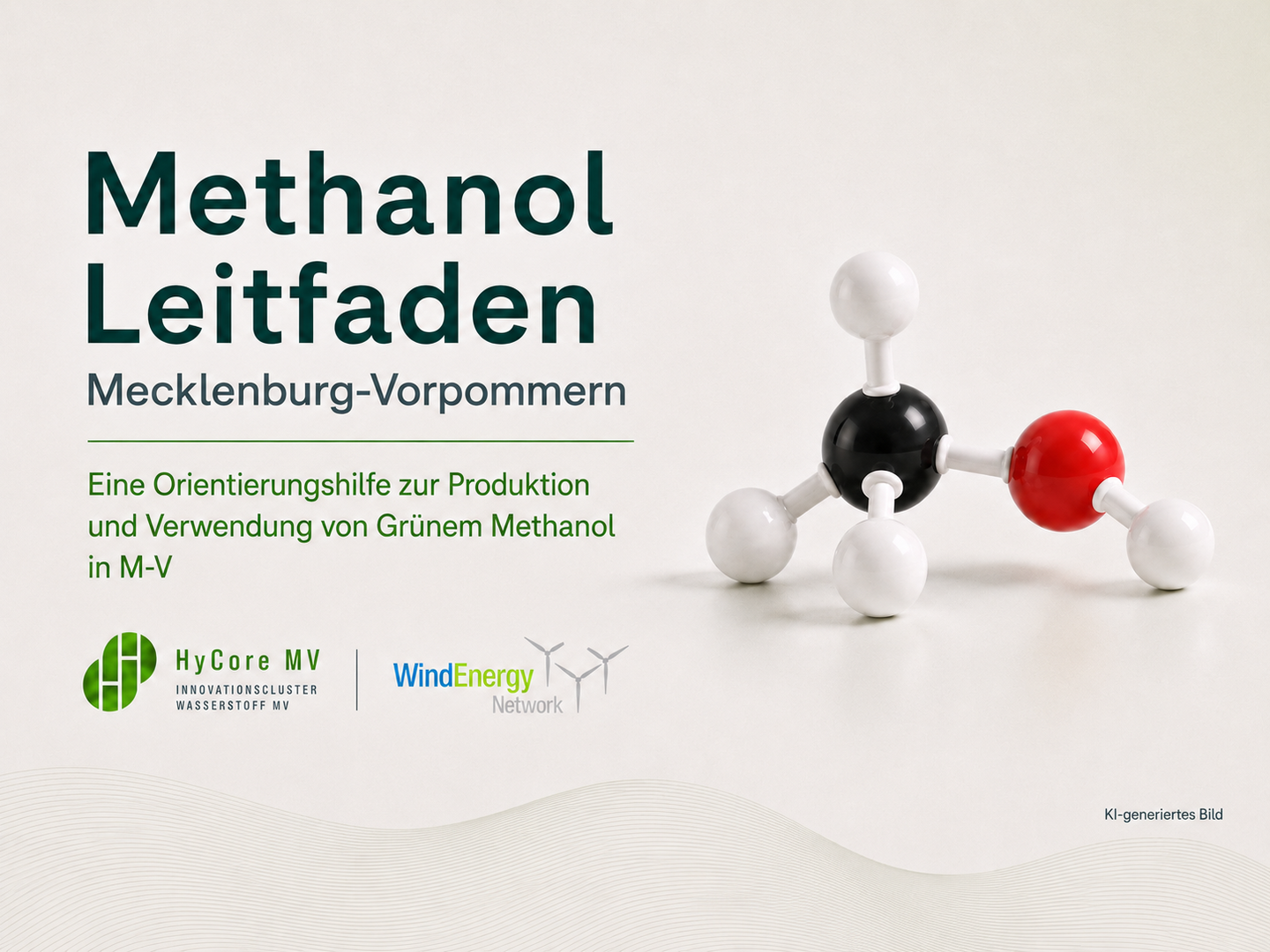
The ‘Mecklenburg-Western Pomerania Methanol Guide’ sets out, over 43 pages, the regional context, ongoing projects and potential areas of application. It also identifies technical, economic and regulatory hurdles and provides recommendations on how the political, business and academic sectors can work together to establish a sustainable methanol industry.
The guide was developed by experts from industry and academia who came together in the Methanol Working Group. These include, amongst others, the INP in Greifswald, the WindEnergy Network, as well as LIKAT and Fraunhofer IGP in Rostock, and the Institute for Renewable Energy Systems at Stralsund University of Applied Sciences. The work was initiated by the INP and the WindEnergy Network as part of the HyCore Hydrogen Innovation Cluster M-V, as well as the Wind Energy Cluster M-V and Future Energy M-V projects.
The technical exchange within the working group is set to continue. A fourth methanol workshop is planned for the fourth quarter of 2026. “The guide brings together the perspectives of various stakeholders from industry and academia. With the fourth methanol workshop, we aim to continue the technical exchange and further explore the areas for action identified,” says Peter Wieland, project manager at the WindEnergy Network.
Through the Methanol Working Group, WindEnergy Network and INP are creating an important platform for pooling knowledge and expertise from industry, academia and practice, thereby paving the way from individual projects towards a sustainable methanol economy in Mecklenburg-Western Pomerania.
The Mecklenburg-Western Pomerania Methanol Guide is available for download here (German language only).
Funding information
The HyCore Hydrogen Innovation Cluster M-V is funded by the Ministry for Economic Affairs, Infrastructure, Tourism and Labour of Mecklenburg-Western Pomerania as part of the Joint Task ‘Improvement of the Regional Economic Structure’.