On 30 September 2021, around 100 national and international participants from business, politics and research will meet at the CAMPFIRE Symposium 2021 "Wind and Water to Ammonia - Maritime Fuel and Energy Storage for a Zero-Emission Future" at the Ozeaneum Stralsund.
The symposium will be opened by Christian Pegel, Minister for Energy, Infrastructure and Digitalisation of Mecklenburg-Western Pomerania.
Germany's goal is to become largely greenhouse gas neutral by 2045. At least 80 percent of the electricity supply and 60 percent of the total energy supply should then come from renewable energies. The current energy system is to be transformed into an emission-free energy system based on renewable energies.
The CAMPFIRE symposium invites participants to discuss topics related to the future of carbon-free energy supply based on green ammonia. "The aim of the CAMPFIRE partners is to develop new energy conversion and storage technologies based on green ammonia. Wind or solar power is stored in the energy carrier ammonia (NH3) and used as an innovative energy and propulsion energy, for example in shipping. The end products are water and nitrogen, which can be released back into the environment without harm," says Angela Kruth, coordinator and spokesperson for the CAMPFIRE alliance. Ammonia is carbon-free and offers real prospects as an economically storable energy carrier. German industry has more than 100 years of experience in the production, storage and transport of this gas. Germany's largest ammonia terminal is located in the chemical port of Rostock-Peez ( ), where 600,000 tonnes of ammonia are handled for fertiliser production by YARA GmbH & Co KG.
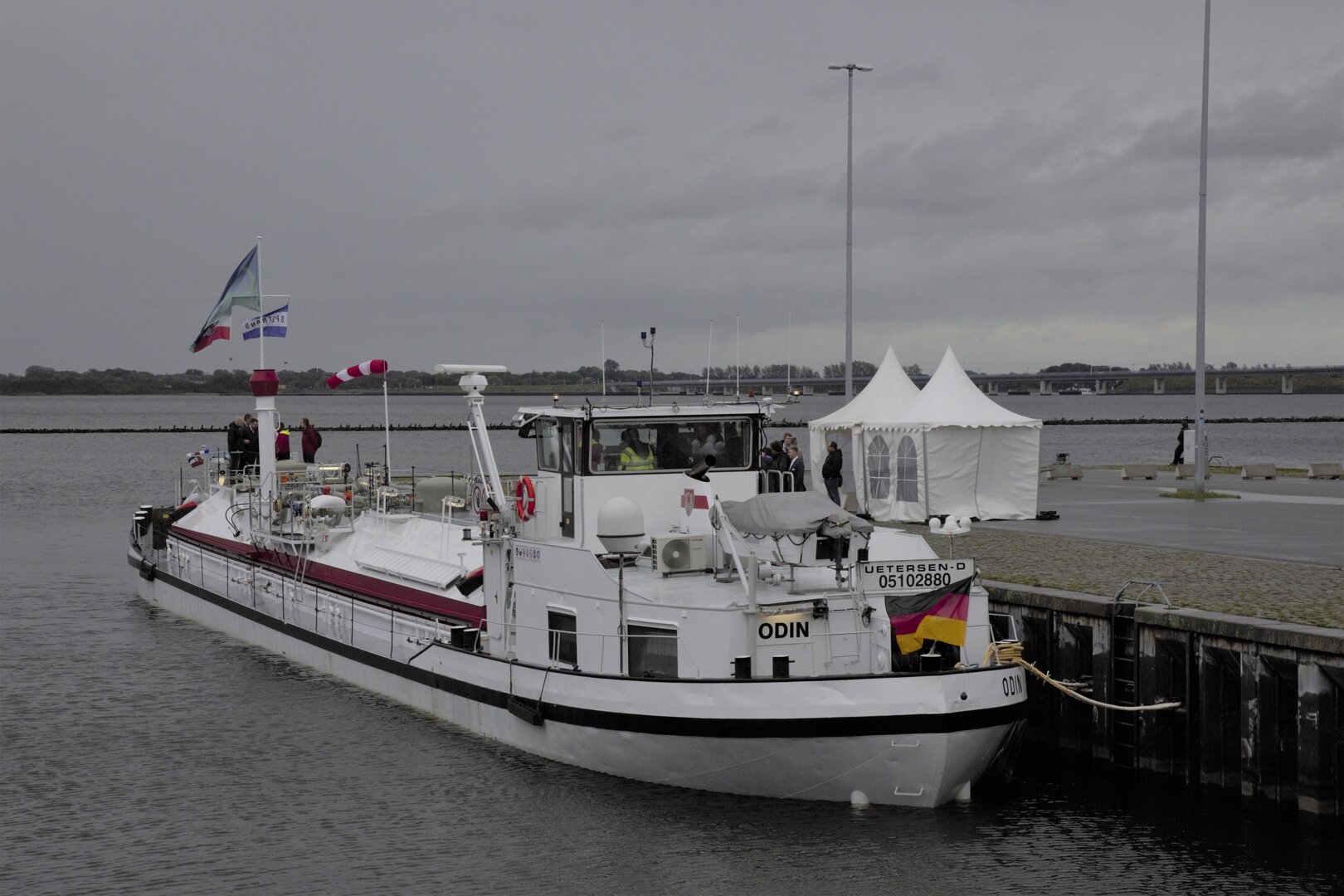
"With the international symposium in Stralsund, we are pursuing even closer networking between the green ammonia consortia from the European Union and Scandinavia to develop and establish innovative technologies for the future global green ammonia ecosystem," explains Kruth. A highlight of the conference is the opportunity to visit the safety facilities of the 150-tonne ammonia bunker ship "Odin" owned by the Spetrans shipping company in the port of Stralsund, which has been used for many years to supply power plants.
In this context, the Rügen-Stralsund region, recently selected for the second time as a "HyExpert" region by the German government, will also be presenting itself at the exhibition. Rügen-Stralsund is taking up the challenge of realising a regional hydrogen economy in Vorpommern. The region aims to promote the development of a local hydrogen infrastructure and implement model projects for the realisation of the hydrogen economy. A hydrogen bus from the company "Busses 4 Future", including a model of a hydrogen refuelling station, will be on display not only for symposium participants but also for the general public.
CAMPFIRE technologies produced in the North-East region will enable an energy economy based on green ammonia and a carbon-free, secure energy supply in the Baltic Sea region and beyond in the future. This will create effective and economical ways of reducing the global carbon dioxide content in the Earth's atmosphere in the long term. On 30 September, keynote speeches on topics such as the EU hydrogen strategy in the maritime sector, ammonia as a maritime fuel, green hydrogen and ammonia projects in Scandinavia, and the CAMPFIRE Open Innovation Lab will provide an interesting overview of global activities in the field of green ammonia and the future direction of the CAMPFIRE alliance.
The CAMPFIRE alliance, financed by the German federal government, was founded in 2018 as part of the BMBF WIR! "Change through Innovation" programme. It provides the initial spark for sustainable structural change in the North-East region by establishing innovative paths and developing economic advantages for small and medium-sized enterprises based there. The alliance now has over 60 partners, representing approximately 80% of the companies in the North-East region, who are working together to realise exportable technologies for a future global carbon-free ammonia-hydrogen energy system.