Seeds are facing increasing challenges: fungal pathogens such as anthracnose, loose smut in barley, and common bunt in wheat threaten agricultural yields and quality. At the same time, chemical seed treatments are under growing pressure due to regulatory requirements and environmental concerns. Against this backdrop, research into physical alternatives is gaining importance.
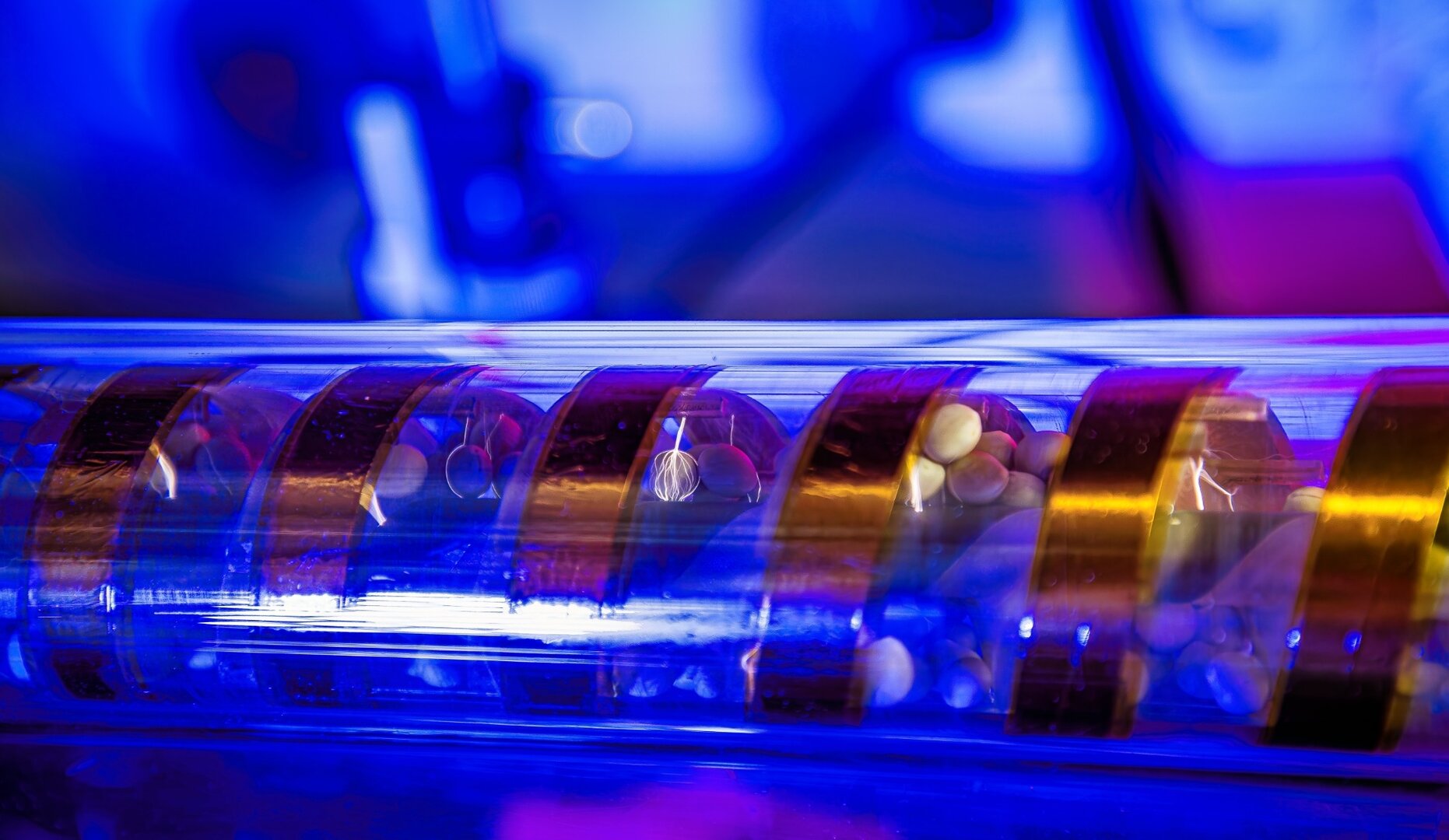
As part of the PHYSICS FOR SEED TREATMENT research project—conducted within the BMBF-funded WIR! Alliance PHYSICS FOR FOOD—scientists investigated seed disinfection using cold plasma. The aim was to develop a reliable, environmentally friendly alternative to chemical treatments. “Our results show that plasma treatment, in certain cases, achieved effects similar to established methods,” explains project leader Dr. Nicola Wannicke from the Leibniz Institute for Plasma Science and Technology (INP). In addition, positive effects on seedling emergence and yields were observed following the plasma treatment. At one site, an increase of around 6 decitonnes per hectare was recorded for winter barley in 2023. This is an additional benefit on top of improved seed hygiene, which could provide an incentive for future practical application.
Focus on seed-borne diseases
The project focused on combating loose smut in barley and common bunt in wheat. Both pathogens can cause considerable damage and reduce the germination capacity of the plants. While lab experiments had already demonstrated the effectiveness of plasma treatment, field trials yielded important insights into practical application.
Challenges for practical use
The research results could play a decisive role, especially for organic farming, where the use of chemically treated seeds is severely restricted. “If, in future, only seed that has been untreated for years may be used, these diseases could spread rapidly,” warns Dr. Andreas Jacobi of Saatzucht Bauer GmbH & Co. KG. “Plasma technology could be a crucial solution to mitigate this risk.”
A major challenge for the project was sourcing naturally infected seeds, which are needed for realistic testing but are hardly available on the market. Furthermore, field trials with common bunt in wheat proved especially demanding, as the pathogen can pass into the soil. Finding suitable test plots was difficult, since farmers are understandably wary of contaminating their fields.
Further research needed
Although the project has been successfully completed, further research is required. “The results so far are promising, but for widespread agricultural use, we must demonstrate efficacy under varying conditions and study the long-term effects of plasma treatment on seed quality and plant development in greater detail,” emphasizes Dr. Nicola Wannicke.
About PHYSICS FOR FOOD
Neubrandenburg University of Applied Sciences, the Leibniz Institute for Plasma Science and Technology (INP), and business partners launched the ‘PHYSICS FOR FOOD – A REGION RETHINKS!’ project in 2018. Since then, the alliance, together with numerous additional partners, has been developing new physical technologies for agriculture and food processing. These include the use of atmospheric pressure plasma, pulsed electric fields, and UV light.
The goal is to optimize agricultural raw materials, reduce contaminants in food production, decrease the need for chemical seed treatments, and strengthen plants against the impacts of climate change. The initiative is funded by the Federal Ministry of Education and Research (BMBF) under the program ‘WIR! – Change Through Innovation in the Region’ (Funding code 03WIR2810).
Further information: www.physicsforfood.org