Physics for Food
The “Physics for Food – A Region Reinvents Itself!” project uses innovative high-tech physics to shape structural change in the coastal hinterland of northeastern Germany, a region characterized by traditional agriculture and food production. Based on current ecological, economic, social, and political challenges, five areas of innovation potential are being pursued:
A. Replacement of chemical agents in agricultural plant protection.
B. Improvement of crop establishment and plant growth.
C. Strengthening plant health to maintain and increase yields under changing environmental conditions.
D. Optimizing the processing of plant-based raw materials using non-chemical methods.
E. Holistic technology transfer based on the social values of regional and sustainable agriculture.
The strategy-driven approach brought together a consortium of alliance partners in which existing research and development potential is pooled in a way that is unique to the region and which covers the entire value chain, from plant cultivation to the processing and refinement of plant-based agricultural raw materials, by means of appropriate technological developments. The concept forms the basis for sustainable regional development with a promising future and can be exported to other regions.
For more information, visit www.physicsforfood.org
Regional innovation – greater diversity
Holistic technology transfer oriented toward the social values of regional and sustainable agriculture. For the successful implementation of technological innovation in agriculture, a comprehensive approach is taken that includes regional engagement and thus social innovation, considers regulatory issues at an early stage, emphasizes trade in regional value creation, and thus supports the enhancement of a profession in our society.
Healthy plants - Higher yields
Strengthening plant health to maintain and increase yields under changing environmental conditions. - The increase in stress resistance of crops through the use of physical methods is being investigated in detail for practical application in agriculture. Physical treatment methods for growing plant stocks are to be used preventively and acutely against pest and phytopathogen infestation. Improved adaptation to abiotic stress factors through preventive treatments using physical methods is also being investigated. The scientific basis for this is provided by many years of our own research into the application of physical methods in medicine, which is now to be transferred to plant biology issues. If successful, this will open up alternatives to genetic engineering methods.
Efficient processing - Lower costs
Improvement of processing methods for plant-based raw materials and optimisation of the composition of plant constituents using non-chemical methods. Physical treatment methods for growing plant stocks aimed at stimulating the production of food-relevant secondary metabolites have the potential to open up new value chains, particularly in the regional food industry. The use of other physical methods in the various refinement processes of the processing chain, from plant raw materials to extracts, is intended to optimise digestion and extraction processes on the one hand and improve the physicochemical quality of the ingredients on the other.
Robust seeds – greater diversity
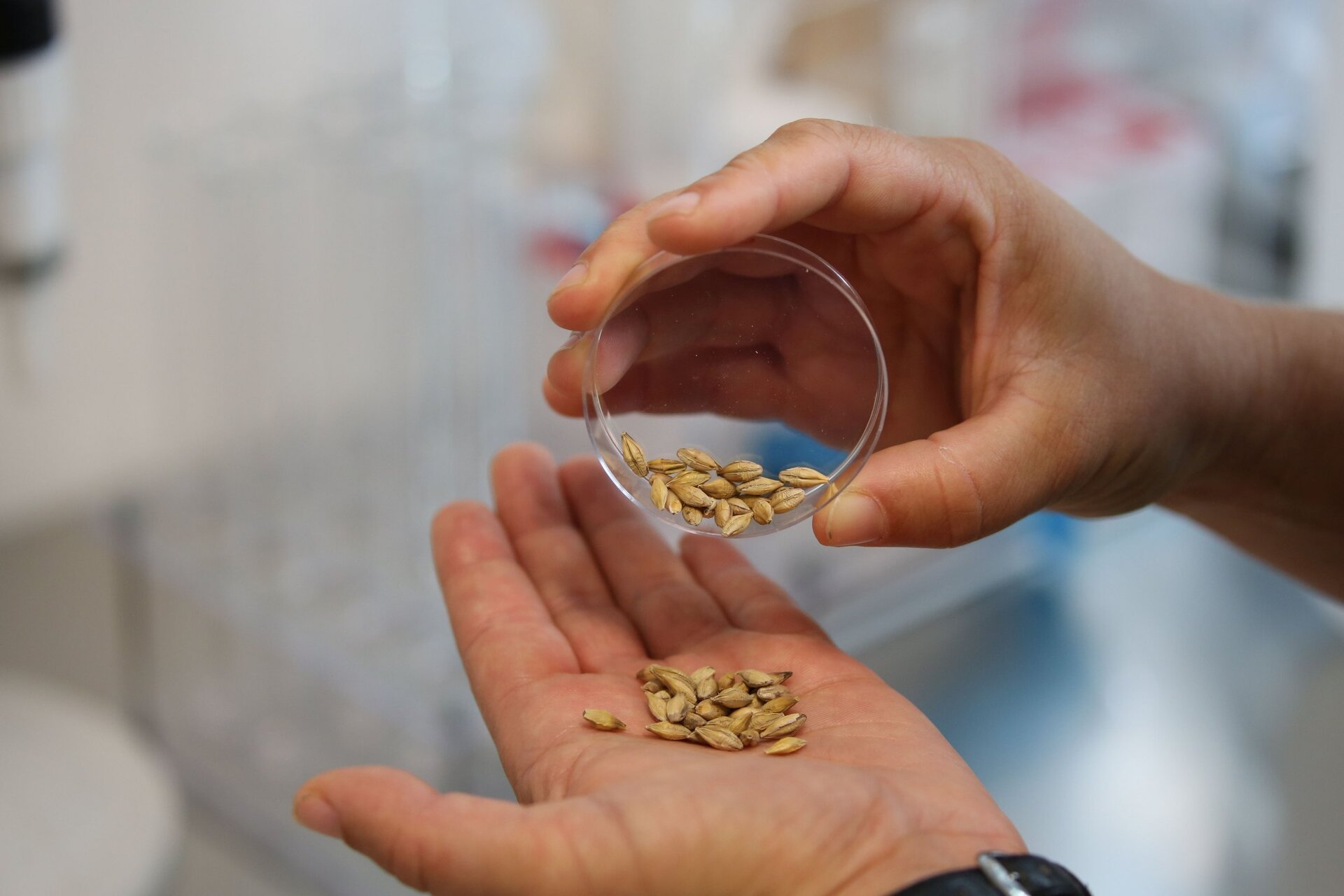
Improvement of crop establishment and plant growth. Laboratory studies have already demonstrated that physical methods can improve seed quality by stimulating crop germination. The investigations will be continued in this project and validated in field trials.
Agricultural plant protection – fewer chemicals
Reduction of chemical agents in agricultural plant protection, especially in the area of plant crops. The focus here is on killing phytopathogens and pests using various physical technologies, particularly in seed treatment (storage, transport and sowing). Appropriate methods have already been successfully demonstrated, so the main focus in the decontamination of plant seeds and bulk goods is on large-scale up-scaling processes.
Contact
Prof. Dr. Jürgen Kolb
Programme Manager
Agriculture, Bioeconomy, Environment
Phone: +49 3834 - 554 3950